Friday, 6 April 2012

Ethos vs Mechanics


 The recent NHS reforms have been accompanied by the mantra that services will continue to be free at the point of delivery. So that's alright then, well actually no. The key ethos of the NHS is that it is available to everyone when they need it. Being free at the point of delivery is only the corollary of this ethos. I pay for breakdown cover and, if my car packs up, I get towed home with no payment. The service is free at the point of delivery, but I only get the service I have paid for.

Introducing more private provision into the NHS weakens the underlying ethos of care being available when needed, because the driving force behind a company is to generate profit. There are plenty of examples where private companies have not put their customers first (insurance and pension mis-selling, Southern Cross care homes, breast implants).

The biggest issue is not necessarily that things go wrong, public organisations can provide poor service as well, but how quickly issues are put right. Private companies will fight to protect their profits (it's their reason for being after all), look at how long it took for the insurance companies and banks to admit liability over the mis-selling of various products. In the case of the breast surgery the main providers of the PIP implants have refused to carry out corrective surgery and the NHS has acted as the safety net. When things go wrong in the public sector, the politicians have more power to take corrective action.

The NHS is far from perfect and includes perverse incentives (too many targets, an obsession with structural change), but the ethos is that the patient should come first. For private companies that will only be the case whilst the patient generates a profit. The argument over how the NHS functions masks the real focus which should be on why the NHS exists – to provide healthcare to all. The only questions we should ask are:

  1. What is the best thing for the patient?
  2. How do we allow staff to deliver that care most effectively?


The market can generate innovation and necessary change, but it cannot ensure everyone gets the healthcare they need, when they need it.

Tuesday, 6 March 2012

Keep It Clinical

Saving money in the NHS is an age old problem. Even when there was money to spend there was still a cost improvement/efficiency/saving programme in operation somewhere in each organisation. The usual national approach to this conundrum is:

  1. Promise to give more power over funding to Doctors (usually G.P.s).
  2. Give lots of money to management consultants in sharp (expensive) suits to help the existing managers to find more savings.
  3. Re-organise the bureaucracy by giving NHS bodies different names, so:
    1. Regional Health Authorities became Regional Offices, which became Strategic Health Authorities, and now they become Commissioning Boards
    2. Health Authorities became Primary Care Groups, which became Primary Care Trusts and now they will be Clinical Commissioning Groups

But despite all this heroic structural change people still get sick and medical technology continues to advance, and spending goes on rising. Putting G.P back-sides on the re-arranged chairs around the meeting table makes very little difference to the cost or type of services provided.

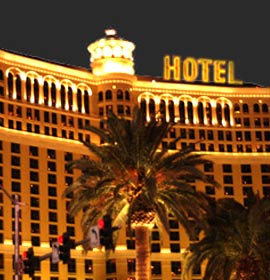
The way to reduce spending is to block book real expensive hotels a week at a time and make sure you put plenty of money behind the bar. Not to send the poor managers clutching their P45s on one last beano, but to gather the local clinicians together so they can really change services.

Put representatives of all the clinicians involved in caring for a particular patient group in a nice hotel a long with some high class...facilitators and give them a week to re-design how the patients receive their care and treatment. Let them at the A La Carte menu, and give them a free bar, the only provisos are that the result of the week's deliberations must be the most effective and practical care pathway they can devise in 5 days (or you send them the hotel bill) and no-one can mention money. You will not get an effective pathway if everyone is worrying about the money.

Rather than getting clinicians to play at being budget managers you will have them together where they can focus on designing the best way to care for their patients. With free reign of the facilities and the alcohol they will relax,which will allow everyone involved to have their say. This is not a new idea, the Persians would only finally agree on a battle plan if they all agreed on it whilst drunk. Hopefully our care givers will not plot to over-turn Western democracy under the guise of redesigning the Diabetes pathway. Instead, given the space and time to talk about their favourite subject, they will come up with radical change.

The other thing this radical change will do is save money. The most effective pathways will make sure the patient is seen by the right clinician at the right time more often, reducing duplication and waste which will save money.

So dig out the hotel directories and get booking.

Saturday, 11 February 2012

The £20bn Question


The NHS has to find £20bn worth of savings over the next 3 or 4 years.  So everyone is asking how you save what is, even to an investment banker, a large sum of money.  Whatever way is chosen will have to lead to services being provided in radically different ways, as the savings target is so large.

I can think of two ways to find £20billion:

1)             Ask every member of staff in the NHS to look down the back of their sofa.  This would need an average of £20,000 per sofa; which is unlikely unless lots of staff are all living with senior banking executives.

2)             Increase car parking charges at every NHS property.  This would lead to hourly charges equivalent to the weekly wage of an average senior banking executive.

Or there is the Government’s preferred option:

3)             Give 80% of the NHS budget to GPs without formal training in budgetary control and cross your fingers.

1) &  2) are very unlikely to find you £20bn

Certainly 3) is better than either of the first two options, but not really a sound basis for reducing expenditure by 4% per year for the next 3 years.  As we have seen recently, GPs are not keen on being the Government's human shield when it comes to deciding where to cut budgets. 

It would be surprising if students queue up on their first day at Medical School and decide, “I’ll skip basic anatomy this term and take an introductory course on ‘Budgetary Techniques for Managing Cross Programme Finances’ instead.  After years of training in the medical sciences you can see why GPs are not keen to fill their diaries with contract meetings or spend time analysing over-complicated financial spreadsheets.

The taxpayer has spent a lot of money training doctors, nurses, radiographers, physiotherapists, social workers etc.  We then want them, and in this case specifically GPs, to work out how to save £20bn.  That is the wrong use of their training.  We should get them all to answer a completely different question:

What sort of health services do we want to provide in 3 or 4 years’ time?

That is a pretty big question and also one that all of our highly trained clinicians should be equipped to answer, if they can work together on the solution.  What we don’t need to do is throw finance in the mix as well, certainly not at the start of the process.  If you make money the question, you will get an answer that is built around spreadsheets and financial analysis, not one focussed on patient care.

We have a market structure in the NHS – Primary Care Trusts (soon to be GPs) buy services and hospitals, community services and mental health trusts provide care.   With any market you have the need to compete, so if you tell all these organisations that in effect the market has just got smaller (by £20bn), then Primary Care Trusts will try and buy less from the providers who will fight to maintain their income levels as best they can.  Organisations defending their budgets are unlikely to generate innovative solutions to the question of how we provide patient care.  We need to accept that the NHS does not act like a proper market. I can't pop into town and see if one GP will sell me their services cheaper or offer more frills than their opposite number across the road.  You can't get your hip replacement cheaper in Croydon than in Crawley.

We need to get clinicians out from behind the organisational walls and talking as equals about what is the best way to provide patient care.  You need to involve all shades of clinical and social care disciplines, otherwise the debate will be unbalanced.

Time to ask clinicians the question they are trained to answer, you never know it may unearth the £20bn we are looking for.

Next step how we get all the clinicians in one place….

Sunday, 31 July 2011

Living in Fear

I live in fear that our politicians do not understand modern life.  The Right are wedded to the Market, obsessed that only through competition can any service be provided, and as an inevitable consequence, fear must stalk the corridors of our hospitals and schools.

The Left put their faith in the State, but because no-one trusts all those faceless bureaucrats, they put in performance targets, generating perverse incentives (anyone tried to get a GP appointment further than 48 hours in advance?), and wedded to outmoded classifications of productivity.  These are all put together into league tables.  Perhaps the school tables could be sponsored by a bank like the Premier League and we would have Paxman on Newsnight with the head of Ofsted and an academic discussing the latest positions like on Match of the Day.

“Westminster are up two places, but I still don’t think their History department is strong enough for them to push for the title.”
“I fear for Rutland College, poor all round performance, no star quality, they look likeliest for the drop this term.”

Neither way works. 

I fear a country where teachers view children as part of a performance framework – either to prove they should keep their jobs, or to maintain league position and avoid being re-badged as an academy or failing school, with all the extra paperwork and scrutiny that entails.

I fear a Political Class inculcated from real life by policy papers and think tank reports, which probably know the answers that are required before setting out on researching the subject. 

I want an honest debate about what the country needs, not framed in terms of market or state solutions, but in terms of what we really want from our public services and what we, as the populous, need to contribute in terms of money and responsibility.  There is no one right solution, nor one correct way to view the problems.

We need to start facing up to our individual part in the position we find ourselves in.  It is easy to blame the Markets for causing the economic bubble and collapse.  It is easy to blame the then Government or the Coalition for poor decision making.  We just sit here and shake our heads, whilst having less money to live on.  We were the ones who took out the easy loans and 110% mortgages.  And now we expect the politicians to solve the problems with the same mindset that created them in the first place (after Einstein).  We have to take some responsibility and tell the politicians we want it to work differently from now on.  If we don’t then once we climb out of this economic mess we will walk blindly into the next one.

Friday, 15 July 2011

Scandals and Management Culture

It Could Never Happen Here
We all shake our heads and say how shocking the revelations are from the News International scandal. As managers and workers we would never do such things - there are limits after all. Really? So we always stand up to our bosses when they ask us to do things that are not quite the ticket, not quite by the rules. Never used the “cheque’s in the post” line?

But that’s not the same (I can hear the cries). Indeed so, but it is how it starts. News International are not the first - Enron springs to mind (as do other corporate horror stories over the years). The issue is not how it starts - we’ve all told white lies and not been completely honest with co-workers, customers, bosses, partners, children.

Out Beyond Right and Wrong Is a Field...I’ll Meet You There (Rumi)
The issue for managers is what sort of culture do you foster? The poor behaviour is condoned, not just in the way people go about their work, but in how they act with each other. If the culture is all about getting the desired end result - however it is obtained - then laws, and people will be broken along the way. As managers it is up to us to keep the focus on the real objective.

If the question “will you meet the target?” only has one answer, how can you have an honest conversation with your staff or your boss? Any failure will be seen as weakness. If failure is a weakness, then the next victim is honesty because no-one wants to be seen as a failure. It is difficult enough (in my experience) to get staff to tell you the truth, rather than what they think you want to hear, without closing down the avenues for open debate.

If failure is frowned upon, then as a boss can you admit you are ever wrong? If you can’t admit that, then neither will your staff. Not a great starting point for solving difficult problems in the organisation, more an incentive to point fingers and bitch about colleagues and other departments.

Better off trying to get beyond right and wrong to somewhere people can work together on what really matters to the organisation.

Start walking towards that field....I’ll meet you there.

Friday, 1 July 2011

Time and Pressure (Never enough of the first and always too much of the latter

Emails flood in, seeming to lap over the top of the computer screen. They push past one another in their urge to get into your in-box.
Staff have a secret CCTV camera somewhere in your office - this must be true as the phone always rings as soon as you open the door in the morning.
You need to build your own TARDIS to get your work done on time.
Your boss seems to use a sadistic "Magic 8 Ball" to decide what project to give you next.
Just a normal day at the office.

The usual reaction to this common condition of working life is to develop a coping strategy, here are some of the favourite ones I have used in the past:

Burning Martyr
Carry lots of paper into meetings.  Always make sure everyone knows how busy you are (well a problem shared is a problem that person now knows you are trying to solve, usually single-handedly) - if you carry a bleep make sure it goes off regularly in all these important meetings, so the senior managers can see how busy and indispensable you are.  Always have time to take on more work, but always, always let that person know just how much work you have on at the moment.  Hair shirt and ashes are not common garb these days, but may be worn on dress down Fridays.

The White Rabbit
Turn up to meetings late or leave them early as you have too many appointments to attend in one day.  Never walk in corridors - always jog purposefully, with regular glances at your watch.You are busy going somewhere (it really doesn't matter where, just make sure you are seen on the move).  Never stay in your office for longer than 10 minutes at a time - so that your boss can't actually ask if you met that all important, not to be missed deadline, and staff can't pass on that thorny problem everyone has been trying to avoid for the last 3 months.


The Woe Is Me or Don't Blame Me Approach
Sit there and let it all come down on top of your head.  Shrug your shoulders and exclaim "But what can I do?"  When passing on work to your staff, which includes a panic now deadline, shrug and blame "them upstairs" for not prioritising things properly for you - (it will have slipped your mind that the email arrived at your in-box 10 days previously).

The organisational approach to the problem will be to send you on a time management course, which is rather a bizarre response given that we have no way of managing time, only what we do and how we do it.

There is only one person who can stop the rush - you.
There is only one person who can prioritise what needs to be done when - you.
Say no to attending a meeting and take that time to look at how you want to work (I like the 7 habits approach and the immediacy of Getting Things Done) - see how it feels, you may want to do it again.  It is certainly easier than building your own TARDIS.


Friday, 24 June 2011

Department Meetings and How to Run Them

Running Department meetings can fill you with dread and foreboding, so have a thought as to how the staff are feeling.  As a keen manager I always start the meeting with the best of intentions.  But, more often than not, it ends in a depressing dirge of corporate feedback and disinterest.  Below are the notes from a recent staff meeting.


Apologies
Big Boss was pleased to see there were no apologies for the meeting, which showed how seriously the Department was taking the new corporate "participation process".  In reality there were no apologies as no-one wanted to receive the "where were you?" email and the invite from Big Boss for a quick "chat" about commitment and being part of the team.

Corporate Headlines
Big Boss gave detailed feedback on the corporate performance indicators and Y.A.W.N (Yearly Actual Wealth Numbers).  Most of The Staff really wanted to know if the Marketing and Finance Directors did actually have a punch up at the last Executive Team Building Awayday.  The rumour was the Marketing Director ended up being "consoled" by the Chief Execs Personal Assistant.

Progress Updates
Big Boss used the smile he learnt on the "Getting Staff to Like You" course and assiduously gazed at everyone in the room to make them all feel included.  Everyone was holding on to their entry in the "who gets asked first" sweepstake, whilst staring at the table.  For the fourth time running the winner is Jason, the management trainee.  He has prepared a multi-coloured pack showing how much cleverer he is than everyone else.  Big Boss smiles throughout the presentation.
Not being as clever as Jason the rest of the reports are short and vague - Big Boss is not smiling by the end of the progress updates.

Get To Know Your Fellow Team Members
As part of the corporate "participation process" Big Boss has decided that each section of the Department should present to the rest of the group on who they are and what they do.  The IT section were up next.  Big Boss gave a lengthy introduction about how important good IT support is for the organisation.  Carl asked why, if IT was so important, that the network was always slow and the laptops had not been replaced for 5 years.  Big Boss put on his "oh its you" smile and dismissed the query with talk of capex, amortisation and projected infrastructure rollout trajectories.  Carl smiled, that got him a full house in the Bulls**t Bingo game.

Any Other Business
Big Boss persisted with the "participation process" by opening up discussion to the rest of the Department.  By this time any latent interest has dissipated and the staff just wanted to leave the room before their brains started to bleed.  Big Boss is left wondering what was wrong with the staff, but at least Jason understood his jokes.

Time and Date of Next Meeting
Time - when you have engaged with staff so they want to speak.
Date - when the staff have things they need to share.